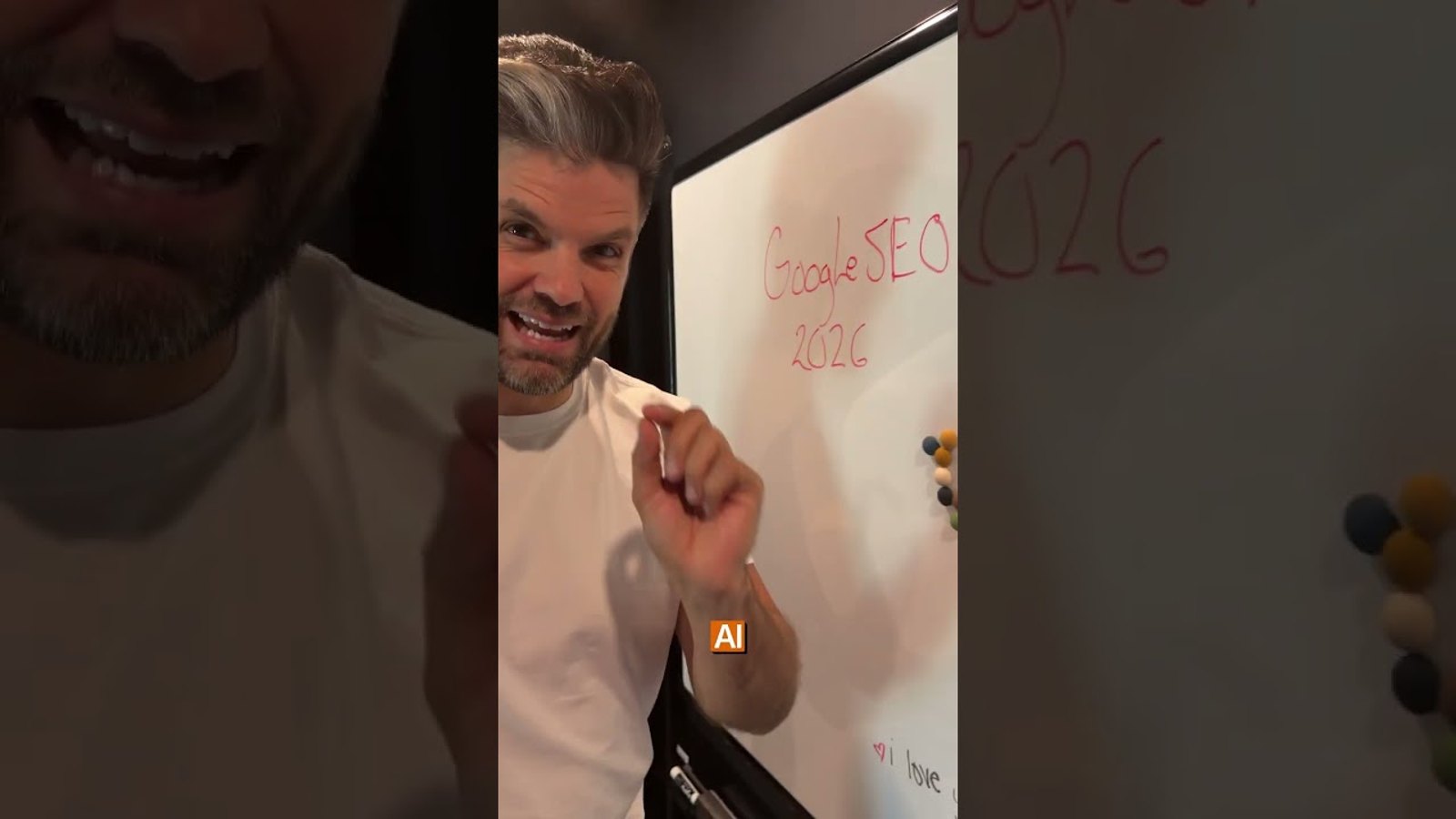
If you are asking why is no one visiting my website, check four causes: tracking, rankings, AI answers, and your Business Profile. Fewer clicks often means the customer got an answer on Google's page or in ChatGPT, which I compare in ChatGPT vs Google. In my short video on Google SEO changes in 2026, ten blue links shrink to three map results, then one AI answer.
Why is no one visiting my website?
Usually the visits went somewhere you can still measure: an AI answer, a map listing, or a tracking gap. Pew Research Center found Google users clicked a result on 8% of visits with an AI summary, versus 15% without. Check each cause before you change the site.
One owner wanted help to "make a new website show up in Google searches", in a 5-star Trustpilot review of another agency. That is still the goal underneath this question.
Another owner wrote in a 1-star review that their "rankings had dropped tremendously month after month". Sometimes that is the cause. Often, rankings hold and only the clicks fall.
Is Google Analytics counting every visit to your website?
Not always, so rule out a tracking problem before you assume the website traffic is gone. Google's guide to debugging traffic drops lists reporting glitches among the causes to check. Open your analytics and confirm the tag loads on every page, including pages added after launch.
A redesign, a new theme, or a cookie consent banner can stop the tag from loading. When that happens, visits fall in the report while the phone keeps ringing.
One owner on r/smallbusiness put it plainly: "You'd need to ask every customer how they found you". Add that question to your intake form and phone script, so you count customers as well as clicks.
Where the clicks went when AI answers arrived
When Google shows an AI summary, fewer people click any link at all. In Pew Research Center's 2025 study, users clicked a link inside the summary on just 1% of visits. Check your top search terms for an AI summary above your listing.
Pew also found people ended their browsing session on 26% of pages with a summary, versus 16% without one.
ChatGPT and Gemini answer inside the chat, so a customer can pick a business without opening any website. Watch my short video on why your website clicks are dropping. In it, I explain that the clicks are moving to AI recommendations.
Customers who call from your Google Business Profile skip the website
A local customer can find you, read your reviews, and call from your Google Business Profile without opening your site. That call never appears as a website visit.
Fewer visits do not always mean fewer customers. Compare the calls, direction requests, and website clicks in your Business Profile performance report with your actual sales.
My guide on how to get more calls from your Google Business Profile covers that side. Count customers and calls first, then visits.
Did your Google rankings drop or only your clicks?
Google Search Console answers this, because it shows impressions, clicks, and average position for each search term. Google's traffic-drop guide separates a small drop, like position 2 to 4, from a large one, like 4 to 29. Compare the last three months with the same months last year, so seasonality does not fool you.
If impressions held and clicks fell, your pages still show up, but people stop before they click. That points to an AI Overview or another result above your listing.
If impressions fell too, the problem is rankings or indexing. My guide to why competitors outrank you covers the ranking side.
Technical problems that hide a website from Google
Rule these out when Search Console shows impressions falling across the whole site.
-
A noindex tag left on from the build, which tells Google to drop the page.
-
A robots.txt rule that blocks Google from crawling key pages.
-
Server errors or pages that return "not found" after a redesign.
-
A security warning from malware or a hacked plugin.
-
A manual action for spam, shown in Search Console.
-
Pages so slow on a phone that visitors leave before they load.
Website traffic and AI answers in numbers
Use these figures, each from a named source, when you explain a drop in website visits to your team.
-
Google users clicked a regular result on 8% of visits with an AI summary and 15% without (Pew Research Center, 2025).
-
They clicked a link inside the AI summary on 1% of visits (Pew Research Center).
-
Google's AI Overview appeared on 25.9% of local buying queries in my August 2026 study of 216 US markets.
-
Google's local pack held at 0.82 overlap between two asks days apart, the steadiest result in that study.
-
ChatGPT's list of businesses held at 0.36, so its picks changed far more from week to week.
-
Google's AI Mode answered all 216 of 216 local captures in the same study.
Seasonality and search interest can lower website traffic
Some drops are demand, not your website. Google's traffic-drop guide names seasonality and changes in search interest as normal causes. Check your top search terms in Google Trends before you change anything.
A pool company slows in winter and a tax preparer slows in May. If the whole category dipped, your share may be steady.
Compare year over year, never month over month, when your business has a season. Then look at clicks and calls together.
What AI search visitors are worth to a local business
AI search visitors arrive in smaller numbers, but they often arrive closer to a decision. Semrush's 2025 study found the average AI search visitor worth 4.4 times a traditional organic visitor, based on conversion rate. Treat that as an average across many sites, and measure your own calls before you plan around it.
By the time someone clicks through from an AI answer, they have often compared options already. Fewer visits can still bring the same number of customers.
Watch my short video on whether AI search matters for a local business. In it, I explain the one answer economy and why reviews now live in many places.
Check whether ChatGPT names your business
If customers are choosing in ChatGPT, your website traffic will not show it. Ask ChatGPT the question your customers ask, such as "Who is the best [service] in [city]?", and note who it names.
Then ask "Who would you recommend and why?" and record the answer with the date. ChatGPT's list changed a lot between asks in my study, so repeat the check weekly.
For the full picture, read my guide to AI visibility for local businesses. It covers what to track across ChatGPT, Gemini, and Google's AI.
How to find out why no one is visiting your website
- Confirm the analytics tag loads on every page, then compare visits with the calls and form leads you logged.
- Open Google Search Console and compare impressions, clicks, and average position with the same months last year.
- If impressions held and clicks fell, search your main terms and note any AI Overview above your listing.
- If impressions fell, check page indexing, manual actions, and security issues in Search Console.
- Ask ChatGPT who the best [service] in [city] is, and note whether your business appears.
- Open your Google Business Profile performance report and count calls and direction requests for the same months.
What to fix first to win back website visits
Watch my short video on how to get recommended in Google's AI Overview, which splits this into on-page and off-page work.
-
Repair the tracking tag before you judge any traffic trend.
-
Fix any page Google cannot index, starting with your service pages.
-
Write one clear service page per service, naming the area you serve.
-
Add structured data so Google and AI tools read your business facts correctly.
-
Keep your Google Business Profile complete, with recent, detailed reviews.
-
Earn mentions and links from respected sites in your industry.
-
Answer the questions customers ask in plain words, using the approach in my guide to AEO content.
Win back the clicks with AI search optimization
I run AI search optimization across ChatGPT, Gemini, Google's AI, Perplexity, Claude, and Grok, alongside SEO services. The work starts with the checks in this article: tracking, rankings, AI answers, and your Business Profile.
Talk to Spearleaf about AI search optimization
Joshua Albanese is the founder of Spearleaf. He ran the August 2026 study of 216 US markets cited in this article.
- What to track instead: local SEO metrics that matter.
- Start here: why you are not in the Map Pack.
- How I read the study: what AI answers reward in local businesses.