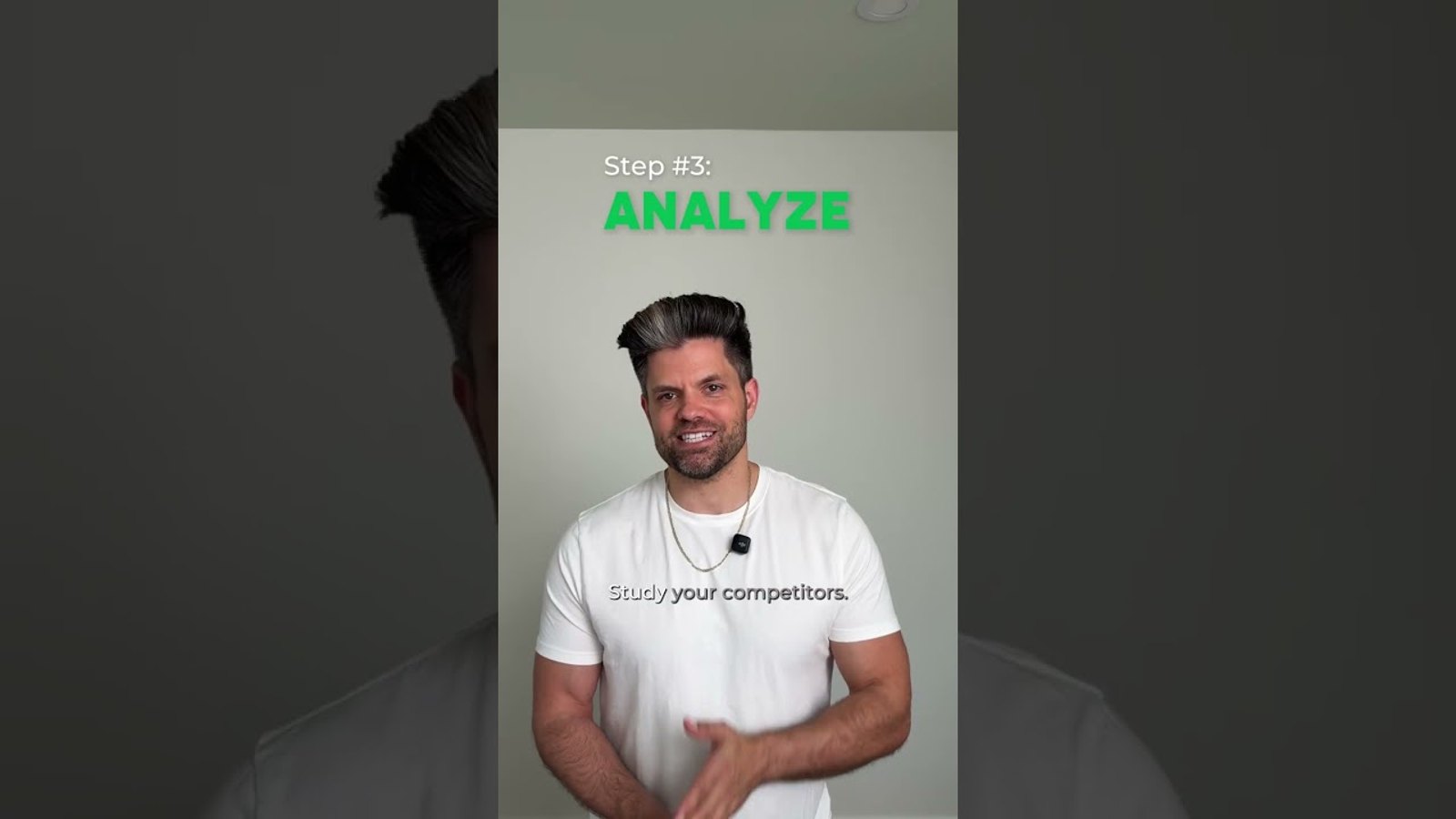
AI visibility is how often AI search tools like ChatGPT and Gemini name your local business, and how often they recommend it. Check it with your customers' own questions every week: in my 216-market study, only 48.2% of shown businesses were shown again days later. In a short video on a four-step AI visibility check, I cover checking AI answers, tracking mentions, studying competitors, and improving your pages.
What is AI visibility for a local business?
AI visibility is whether AI tools name your business when a customer asks who to hire, and whether they recommend you. In my August 2026 study, ChatGPT kept the same number one in only 34.1% of 214 markets. Measure it as a rate over repeated checks, not as one answer.
It is the same check owners have always run on Google, moved into a chat window. One owner, quoted in a small-business article, put the old version plainly: "I searched my business on Google, and nothing showed up."
The difference is that AI answers move. A ChatGPT answer can name you this week and leave you out the next, so one look tells you very little.
Which AI search tools a local business should check
Check ChatGPT first, then Google's AI Overview and AI Mode, then Gemini, Perplexity, and Claude. Google says AI Overviews and AI Mode may use different models, so their answers and links vary. Test each one separately, because each builds its own answer.
Google's AI Overview did not appear on most local buying questions in my study. It fired on 25.9% of them, so a missing Overview is normal and does not mean you are invisible.
Run these checks yourself before you trust any report about them. One owner's review said the "dashboard told me my info was nearly 100% accurate, this was in fact NOT the case."
Why one ChatGPT answer is not a measurement
One ChatGPT answer is one roll of the dice, because the same question can return a different list days later. In my study, only 469 of 974 shown businesses (48.2%) were shown again 4-9 days apart. Track your appearances over many checks instead of trusting one screenshot.
Asking twice on the same day did not settle it either. A second account asking the same question that day agreed at only 0.43 overlap, with the same number one in 6 of 20 markets.
Overlap means how much of the list stayed the same: 1.0 is an identical list and 0 is no shared names. My study page puts it bluntly: "A screenshot is not a ranking."
ChatGPT answer churn across 216 US markets
Use these figures from my August 2026 study, where the question "who is the best [service] in [city]" ran twice in every market.
-
469 of 974 businesses ChatGPT showed (48.2%) were shown again 4-9 days later.
-
The same number one held in 34.1% of markets (73 of 214).
-
ChatGPT's panel held at 0.36 overlap between asks (n=214 markets).
-
Google's local pack held at 0.82 overlap (n=198), the steadiest surface I measured.
-
Businesses named by Google's AI Overview held at 0.26 (n=21 markets).
-
In a night test across 37 markets, the panel swapped toward different businesses, so check at the same time of day.
The questions to ask ChatGPT about your business
The buying question
Ask "Who is the best [service] in [city]?" the way a customer would. Leave your business name out, because naming yourself tests recall instead of visibility.
The follow-up question
Then ask "Who would you recommend and why?" It narrows the list toward one name, and that recommendation is the result that matters.
The reworded question
Reworded questions agreed with the original at only 0.32-0.40 overlap in my study. So also ask a version like "Which [service] in [city] has the best reviews?"
How to run an AI visibility check on your business
- Write five to ten questions a customer would ask, with your service and city, and leave your business name out.
- Open ChatGPT in a temporary chat or logged out, so memory and past chats do not shape the answer.
- Ask each question, then ask "Who would you recommend and why?" Note whether you were absent, named, or recommended.
- Repeat the same questions in Gemini and Google's AI Mode, and note whether an AI Overview appeared on Google.
- Log the businesses named, the ratings shown, and the websites cited, using the list in the next section.
- Run the same check at the same time of day every week, and compare your rate after four weeks or more.
The details to log every time you ask ChatGPT
Keep one row per question per tool, in a spreadsheet you can sort later.
-
The date, the time of day, and the AI tool you used.
-
The exact question, word for word.
-
Whether you were logged in, logged out, or in a temporary chat.
-
Every business named, in the order shown.
-
Whether your business was absent, named in a list, or recommended after the follow-up.
-
The rating and review count shown, and which review site they came from.
-
The websites and directories the answer cited.
Is Google visibility the same as AI visibility?
No. Google visibility and AI visibility overlap, but one does not predict the other. In my study, ChatGPT's picks matched Google's local pack on only 33.1% of displayed cards (323 of 975). Check each surface on its own terms.
Google's local pack was the steady one, at 0.82 overlap between asks. Google ranks local results on relevance, distance, and prominence, so your Map Pack position still matters.
Google's AI Overview sits closer to the pack: 87.6% of the businesses it named were already in that page's local pack. I compare the two engines in ChatGPT vs Google for a local business.
Why ChatGPT reads different websites each time you ask
ChatGPT's answer changes mostly because the websites it reads change between asks. In my study, the websites it retrieved overlapped at just 0.20 between waves (n=197). Check more than one week of results before you decide anything changed.
When ChatGPT did find a business it had shown before, it showed it again 72.5% of the time (469 of 647). Its taste held fairly steady, and its reading list did not.
For measurement, a drop in one week can be noise. For the business, it means being present on the review sites and directories ChatGPT might read on any given ask.
How to read the competitors AI search recommends instead
Compare the businesses AI names against yours on reviews, rating platform, and address. In my study, businesses ChatGPT kept showing had a median of 226 reviews, against 164 for those dropped. Read that as a pattern to compare, since both groups had the same 4.9 rating.
In the study's first wave, 17.4% of ratings that resolved to one platform were Yelp's (139 of 799). Among businesses shown twice, 16.0% switched platforms (75 of 469). Look at whose rating ChatGPT shows for you and for each competitor.
An address in the asked city carried a descriptive odds ratio of 14.4, which describes who got shown, not why. I read more into it in what AI answers reward.
How to read an AI search visibility score from a tracking tool
There is no standard AI visibility score, so a tool's number means only what its method says. In my 2026 study, one question asked twice agreed at just 0.36 overlap, so the number of repeat runs matters. Ask the tool which questions, which AI products, and how many runs sit behind the score.
Many of these tools sell themselves as GEO tools, short for generative engine optimization. I explain the terms in SEO vs GEO vs AEO.
Then test the tool. Run five of its questions yourself in a temporary chat, and see whether the names match what it reports.
How to connect AI search visibility to calls and customers
Tie AI visibility to customers by asking every new customer how they found you. Google says traffic from AI Overviews and AI Mode is counted inside Search Console's overall Web search data. Add "How did you hear about us?" to your forms and phone script.
One owner on r/smallbusiness put it plainly: "You'd need to ask every customer how they found you". A customer who hears your name in ChatGPT may call without ever clicking your site.
Track AI mentions next to the calls and booked jobs you already measure. I cover the local numbers worth tracking in local SEO metrics that matter.
What to fix when ChatGPT leaves your business out
Your review count and rating
Compare your review count and rating with the businesses AI named. Steady reputation management builds the review depth the survivors in my study had.
Your business profile on Google
Keep categories, hours, and services current. A complete Google Business Profile feeds Google's local pack, the steadiest surface in my study.
Pages that answer customer questions
Give each service its own page that answers what customers ask. Then rerun the same check, so you measure the change instead of guessing at it.
Measure whether ChatGPT and Google's AI recommend your business
I run AI search optimization across ChatGPT, Gemini, Google's AI, Perplexity, Claude, and Grok, alongside SEO. The work starts with the checks in this article, repeated over time, so you see how often AI recommends you and where it leaves you out.
Talk to Spearleaf about AI search optimization
Joshua Albanese is the founder of Spearleaf. He ran the August 2026 study of 216 US markets behind the numbers in this article.
- How each one picks: ChatGPT vs Google for a local business.
- Plain definitions: SEO vs GEO vs AEO.
- What to measure: local SEO metrics that matter.