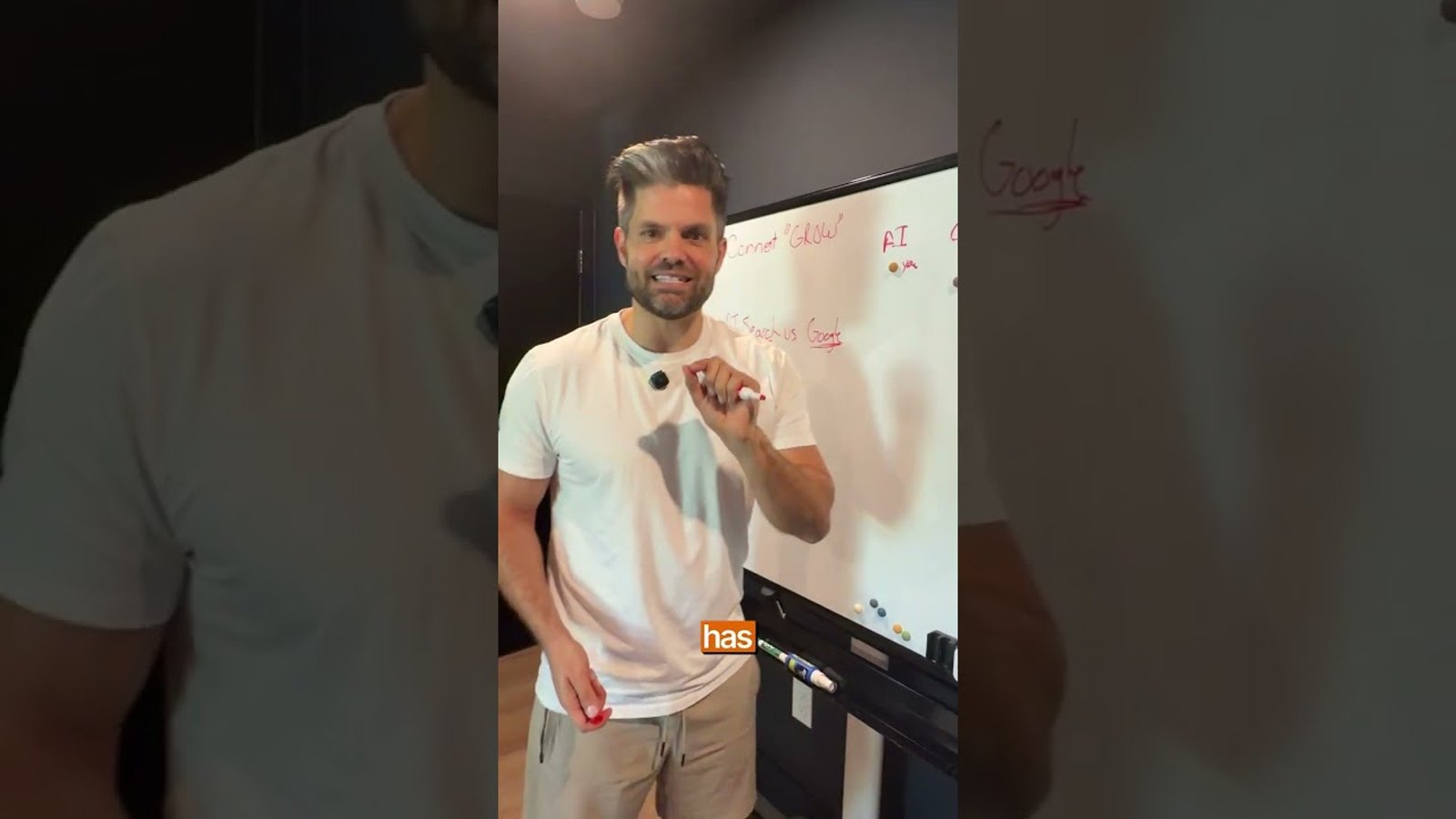
For a local business, ChatGPT vs Google comes down to this: Google shows a list and ChatGPT names one. Ranking on Google does not carry over: in my 216-market study, 48.2% of businesses ChatGPT showed were shown again days later. In a short video on Google vs AI search for local businesses, I show why Google finds the closest option.
What is the difference between ChatGPT vs Google for a local business?
Google hands the customer a list of local businesses, and ChatGPT narrows to a name. My August 2026 study measured overlap of 0.82 for Google's local pack and 0.36 for ChatGPT's panel. Check both separately, because a strong Google result does not predict what ChatGPT will say.
Overlap here means how much of the answer stayed the same when I asked the identical question again days later. A higher number means a steadier list. Google's local pack was steady, and ChatGPT's panel was not.
One owner on r/smallbusiness called Google rankings "a worthwhile thing to spend marketing money on". The bar was "ranking you high (I'd say top 5)". That holds on Google, but it does not carry over to ChatGPT by default.
How Google decides which local business to show
Google ranks local results on relevance, distance, and prominence. Google's Business Profile help page defines all three and says more reviews and positive ratings can help your local ranking. Start with a complete Google Business Profile, because it feeds the Map Pack.
Relevance is how well your profile matches the search. Distance is how far you are from the searcher. Prominence is how well known you are, including reviews and links from other sites. Your Business Profile is where Google reads the basics, such as categories, hours, services, and photos.
Another owner wrote that "what used to move the needle quickly doesn't do as much now". A third "hired someone who helped me rank on first page". If you want this in under a minute, watch my short video on a category-of-one strategy for local businesses.
How ChatGPT finds and recommends a local business
ChatGPT builds each local answer from a fresh read of the web. OpenAI describes ChatGPT search as answers with links to the sources behind them. Make sure your site, listings, and reviews all say the same true things about your business.
It reads your website, review sites, directories, and what other people say about you. The exact weighting is not published, so I describe the inputs and not a formula. That is why the same facts across every source matter.
A follow-up such as "Who would you recommend and why?" moves ChatGPT from a panel toward a single name. If you want this in under a minute, watch my short video on why AI search is not one algorithm.
Google shows a list and ChatGPT names one business
Crawls and indexes the web, then ranks local businesses on relevance, distance, and prominence. The customer sees a list of links and a Map Pack. Local pack overlap was 0.82.
ChatGPT
Reads the web fresh each time and weighs your site, reviews, listings, and mentions. The customer sees a short panel, often narrowed to one name. Panel overlap was 0.36.
What you can influence
Both reward the same foundations: a Business Profile, reviews, and a clear website. Check ChatGPT on its own terms, because the result does not transfer.
Why a Google ranking does not carry over to ChatGPT
A Google ranking does not carry over because ChatGPT rebuilds its answer each time it is asked. In my August 2026 study, 469 of 974 shown businesses (48.2%) appeared again days later. Check ChatGPT on its own terms, not through your Google rank.
The foundations overlap, but the result does not transfer automatically. A business can hold a strong Map Pack position and still miss ChatGPT's answer. That is why ChatGPT needs its own check, with its own question and follow-up.
If you want this in under a minute, watch my short video on ranking on Google versus being recommended by AI. For a real case, watch my short video on a business that ranks on Google Maps but not in AI search.
ChatGPT and Google stability across 216 markets
Use these figures from the same 216-market grid in August 2026, where each question was asked twice in every market, 4-9 days apart.
-
Google's local pack held at 0.82 overlap (n=198 markets with a pack in both waves).
-
ChatGPT's panel held at 0.36 overlap (n=214 paired markets).
-
Businesses named by Google's AI Overview held at 0.26 (n=21 markets).
-
ChatGPT kept the same number one business in 34.1% of markets (73/214).
-
469 of 974 businesses ChatGPT showed (48.2%) were shown again.
Why reviews and listings matter in ChatGPT and Google
Google's help page counts review volume and ratings toward prominence, and ChatGPT reads reviews in its own way. Keep your Google and Yelp profiles accurate and current.
In my study, 17.4% of ChatGPT's displayed ratings that resolved to one platform were Yelp's (139/799). The rest showed Google's numbers. An in-city address carried a descriptive odds ratio of 14.4 for being shown. That is descriptive, not causal.
If you want this in under a minute, watch my short video on a med spa invisible to AI search.
Where Google AI Overviews and Gemini fit next to ChatGPT
Google has its own AI layer, including AI Overviews and Gemini, and it behaves differently from ChatGPT. In my August 2026 study, Google's AI Overview fired on 25.9% of local buying queries. Track Google's AI features separately from ChatGPT, because each builds its own answer.
The businesses Google's AI Overview named held at 0.26 overlap between waves. That sample was small, at 21 markets.
Gemini is Google's assistant, and AI Mode is its conversational search layer. Test your business in each, because they are separate surfaces.
The foundations ChatGPT and Google share
The foundations overlap, even though the results do not transfer.
-
A complete, accurate Google Business Profile.
-
Reviews that are recent, detailed, and honest.
-
The same name, address, and phone number everywhere.
-
A website that says plainly what you do and where.
-
Mentions from other sites that talk about your business.
-
A clear service page for each service you sell.
-
Answers to the questions customers ask, on your own site.
How to test ChatGPT vs Google for your own business
- Search "best [service] in [city]" on Google and note your Map Pack position and your rank in the results.
- Ask ChatGPT "Who is the best [service] in [city]?" and note whether your business appears at all.
- Ask "Who would you recommend and why?" and compare the name it picks with your Google position.
- Repeat it in a week, because ChatGPT's answer can change. Watch my short video on best med spa results in AI vs Google Maps.
- Record the date, the question, and the names that appeared, so you can compare week to week.
- Fix the gaps you control first: the profile, the reviews, and the facts on your own site.
How to tell whether ChatGPT or Google sent the customer
A ChatGPT recommendation leaves no click trail the way a Google visit does. In my study, ChatGPT's answers changed within days, so one appearance tells you little. Ask every new customer how they found you, and log the answer.
One owner on r/smallbusiness put it plainly: "You'd need to ask every customer how they found you". Add that question to your intake form and your phone script, so the answer reaches you.
No one controls which business ChatGPT names. Treat any promised ChatGPT placement as a warning sign.
Get recommended by ChatGPT as well as ranking on Google
I run AI search optimization across ChatGPT, Gemini, Google's AI, Perplexity, Claude, and Grok, alongside SEO. The work starts with the checks in this article: what Google shows, what ChatGPT says, and where the two disagree.
Talk to Spearleaf about AI search optimization
Joshua Albanese is the founder of Spearleaf. He ran the August 2026 study of 216 US markets behind this article.
- How I read the study: what AI answers reward in local businesses.
- Start here: why you are not in the Map Pack.
- Compare them: local SEO vs Google Ads.