The best dermatology marketing ideas fill the cosmetic side of a practice whose medical schedule is already booked for weeks. I'm Joshua Albanese of Spearleaf, and in my short video on dermatology marketing, I answer a dermatologist whose skin checks are booked. The four ideas are the board-certified line, your own medical patients, Google search ads and Instagram before-and-afters, each with its rules.
What dermatology marketing ideas fill the cosmetic side?
Four ideas fill it: the board-certified line, your own medical patients, Google search ads and Instagram before-and-afters. Each runs under a written rule, from HIPAA's definition of marketing to Google's health ad policy. Use cosmetic consults booked and rebooked, not clicks, to judge each one.
As one small business owner on r/smallbusiness wrote, "We don't use profit as a measure of success of marketing, we use sales". For a dermatology practice, the sale is a booked cosmetic visit, and the patient who comes back.
The gap is usually cosmetic: injectables, lasers, peels, or a new provider's open hours. When the medical side is full, the cosmetic side still needs a plan.
Why a booked medical schedule still needs dermatology marketing
A full medical schedule fills from referrals and insurance, while cosmetic patients pay themselves and shop around. HIPAA treats telling your own patients about your own services differently from other marketing, per 45 CFR 164.501. Use the medical side as the cosmetic side's first audience.
Word of mouth works, but you may want more consistent lead flow on the cosmetic side. One Trustpilot reviewer of a marketing agency called impressions and clicks numbers "which anyone knows means nothing". So this guide scores every idea by cosmetic consults booked and rebooked.
The split is a planning lens, not a law. Some treatments, such as lasers for acne scars or rosacea, sit on both sides, and coverage depends on the plan. Sort each treatment by who pays for it.
Four dermatology marketing ideas, judged by cosmetic consults booked
Lead with the board-certified dermatologist
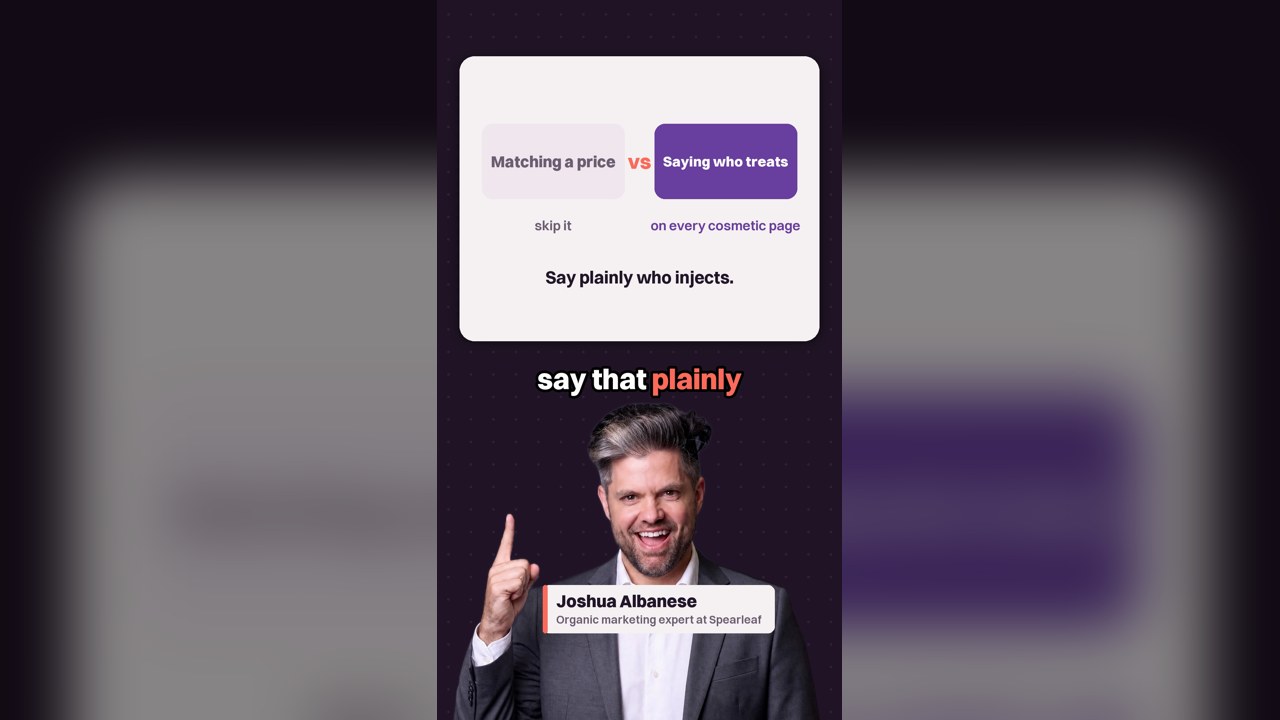
Skip the Botox price match with the med spa down the road. Say who does each cosmetic treatment, on every cosmetic page.
Tell your own medical patients
Many come in for skin checks without knowing you do lasers. HIPAA lets you tell them about your own services, and texts and lists have their own limits.
Google search ads, aimed by location and search
Reach people typing a treatment and your town. You pay per click, and prescription drug names as keywords need Google's certification.
Instagram before-and-afters, with permission
Show typical results with written permission on file. Some states add their own photo rules, so check yours.
What runs alongside the four
Treatment pages, reviews, referrals from primary care and skin check events. These build over months, so start them early.
Lead with the board-certified dermatologist, not the Botox price
When the med spa down the road charges less for Botox, I don't recommend matching their price. Compete on who does the treatment. If a board-certified dermatologist injects, say so on every cosmetic page.
If a nurse or physician assistant injects, say that plainly, with their credential and who supervises them. Patients can check a doctor's certification with the American Board of Dermatology's search tool, so make the claim easy to verify.
The lens has limits. A patient who shops on price alone will still choose the cheaper option, and this line will not change that. It speaks to the patients choosing who treats their face.
How should a dermatologist state board certification?
State it per person, with the board's full name, only where it is true. California's advertising law bars physicians from saying "board certified" for a certification from a board that does not qualify. Check your own state's version before you publish.
-
Name the board in full, such as "board certified by the American Board of Dermatology", so a patient can look it up.
-
Put the line on each provider's bio and on each cosmetic treatment page that provider performs.
-
Avoid a practice-wide line that suggests every provider is a board-certified dermatologist when some are not.
-
Give nurse practitioners and physician assistants their own correct titles, and check your state's rules on supervision wording.
-
Remove the claim for anyone whose certification has lapsed, and recheck the list when providers join or leave.
Tell your medical patients about cosmetic services, within HIPAA
Your medical patients often cost the least to reach, and many don't know you do lasers. Under 45 CFR 164.501, emailing your patients about your own health-related services is not marketing, unless a third party pays. HIPAA's authorization rule also exempts face-to-face talk, like a mention during a skin check.
Texts are different. FCC rules require prior express written consent for automated marketing calls to cell phones, and count a text as a call. Add a consent box to your intake form before any promotional text goes out.
FCC rules carve out some health care messages from a covered practice, and that exemption is narrow. Ask your health care lawyer before you rely on it for a cosmetic offer.
Keep your patient list out of Google Ads
If you uploaded your patient list to Google for a filler campaign and it went nowhere, the policy may be why. Google's health ad policy treats ads about injections and cosmetic surgery as sensitive. Customer Match and your data segments are not supported for those ads.
Stop the upload too. HIPAA's own-services exception covers what you tell your patients, not handing their names to another company. Under HIPAA's authorization rule, using or disclosing patient information for marketing needs the patient's authorization.
The same logic applies to any ad platform or list vendor. Remove the uploaded list, and ask your compliance lawyer whether anything else needs fixing.
Google Ads for cosmetic dermatology treatments
Run search ads anyway, aimed by your town and by what people type. You pay per click, booked or not, so send each ad to its treatment page. One reviewer of a marketing agency on Trustpilot named the risk: "I was getting ALOT of clicks and no calls".
Prescription drug names need care. Google's restricted drug terms policy lets US ads name a prescription drug where local law allows. Keyword-targeting that name needs Google's certification, so bid on treatment words, such as wrinkle treatment, until you have it.
Describe approved uses accurately. The FDA's dermal filler page lists approvals for facial wrinkles and folds, lips, cheeks, chin and the back of the hand. Check each product's approved uses before you call it FDA-approved for an area.
Instagram before-and-after photos for a dermatology practice
Before-and-afters let a patient see your results on skin like hers, and each photo needs written permission first. HIPAA's authorization rule covers using patient information for marketing. Check these rules before you post:
-
Get the patient's signed authorization before you post, edit or boost a photo, and keep it on file with the image.
-
Show typical results alongside your best case. The FTC's endorsement guidance says an ad with exceptional results must make the generally expected results clear.
-
Match the lighting, pose and camera setup in both photos, and never retouch the after.
-
Name the treatment in the caption, and label any model who did not have it.
-
Check your state's rules. California's code bans altered images and requires a statement that results may not occur for all patients.
Reviews for a dermatology practice, asked for and answered within the rules
Ask every patient for a review, whether or not you expect a happy one. Google's review policy bans selectively asking for positive reviews and offering any incentive, including discounts or free services. So no free peel for a five-star post, and send the same request to everyone.
The FTC's review rule, 16 CFR 465, bans fake reviews and incentives tied to a review's sentiment. It also bans review suppression, such as unfounded threats against reviewers. Staff reviews count as a conflict of interest under Google's policy, so keep employees out of it.
Reply without confirming the reviewer is your patient or naming any visit detail. A short reply that invites them to call the office protects their privacy. My team handles reputation management for practices that want help with this.
Referrals from primary care doctors to a dermatologist
Referrals from primary care fill the medical side, and those patients become your cosmetic audience later. Make referring easy: one number or e-referral inbox, a fast slot for a worrying spot, and a consult note sent back promptly. I recommend asking referring offices what slows them down.
Thank referring doctors in words. HHS OIG explains that the federal Anti-Kickback Statute covers remuneration for referrals of federally payable care, and remuneration includes anything of value. Ask your health care lawyer before you give a referral source anything at all.
Skin checks as dermatology marketing, stated honestly
A free public skin check event brings new people through the door. The American Academy of Dermatology's program lists public events on its website and hotline, with free flyers and social kits. An Academy member must direct and attend the event.
Physician assistants and nurse practitioners can screen there under a dermatologist's direct supervision. The Academy says it promotes public checks, not private events.
Keep the claims honest. The US Preventive Services Task Force found the evidence insufficient to weigh benefits and harms of clinician skin exams in symptom-free adults. Promote access to a board-certified dermatologist, never a promise that a check saves lives.
A page for each cosmetic treatment, and what ChatGPT says
The slow way is a page for each cosmetic treatment, not one "cosmetic services" page. Each page says who performs it and their credential, what it treats, recovery time, typical results and photos with permission. It takes months, and it is the base under every other idea.
In my study of 216 US markets, I asked ChatGPT to name the best local businesses. Dermatologists were not in the grid, but med spas were, and 19.2% of resolved med spa ratings were Yelp's (15/78). Only 48.2% of businesses ChatGPT showed were shown again days later (469/974).
Patients ask ChatGPT these questions too, so try it tonight. Ask what your patient would, like who does laser hair removal in your town. If you're missing, that is work for web design and AI search optimization.
Which dermatology marketing idea to start first
Start with your own patients and the board-certified line, because both cost staff time, not ad spend. Under 45 CFR 164.501, telling patients about your own services needs no signed authorization. Fix a buried front desk before you buy ads.
If medical calls swamp the phones, cosmetic callers wait on hold. Use this order:
-
This week: the board-certified line, stated correctly, on every cosmetic page and bio.
-
This month: a mention in the exam room, a card at checkout, and an email to existing patients.
-
Before ads: give cosmetic calls their own phone line or their own person at the front desk.
-
Next: Google search ads, one campaign per treatment, each sent to its treatment page. My team runs Google Ads management alongside organic work.
-
All year: Instagram before-and-afters, with signed permission and typical results.
-
Over months: treatment pages, reviews, referrals from primary care and skin check events.
Track cosmetic consults booked and rebooked, by source
- Create a cosmetic consult appointment type in your practice management system, so cosmetic visits can be counted apart from medical ones.
- Ask every new cosmetic patient how they found you. As one r/smallbusiness owner said, "You'd need to ask every customer how they found you".
- Offer fixed choices: told in the exam room, practice email, Google ad, Google listing, Instagram, referral, ChatGPT, friend, other.
- Give the cosmetic line its own tracked number, and turn on call reporting in Google Ads.
- Each month, count cosmetic consults booked by source, and how many of those patients booked a second cosmetic visit.
- Pick one rebooking window, such as six months, and keep it. See the local SEO metrics that matter for what else to count.
Get help with local SEO for your dermatology practice
My team at Spearleaf runs local SEO: the Google Business Profile, reviews, treatment pages and the AI answers that read them. It is the steady source that runs alongside the four ideas while your own patients fill the first cosmetic slots.
Talk to Spearleaf about local SEO
- Start here: how to improve your Google rating without gaming it.
- Read this first: Google Ads for small business, month one.
- Then read: ChatGPT vs Google for a local business.