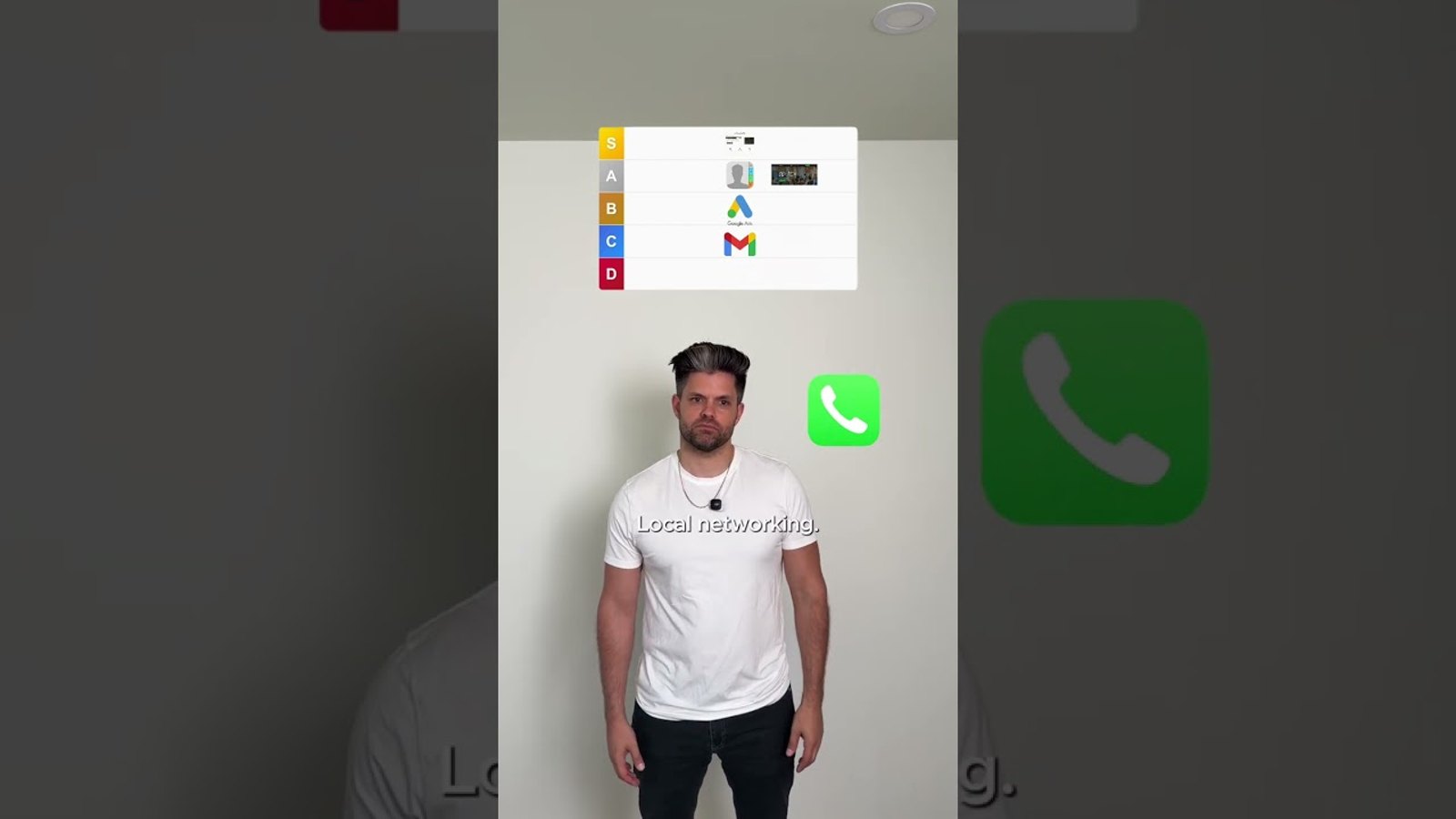
Here is how to get more customers for a service business: start with people who already trust you, then add channels. Below, I rank seven channels, from warm outreach and local SEO to Google Ads, retargeting, and email. In a short video ranking the best ways to get clients, I give each channel a tier.
What is the fastest way to get more customers for a service business?
The fastest way is to go back to people who already know you, like past customers and referrals. Nielsen's 2021 Trust in Advertising study found recommendations from people they know were the most trusted channel, at 89% in the U.S. Use that trust before you pay to reach strangers.
Judge every channel by one question. One electrician on Trustpilot asked "if the amount I planned to spend would be enough to generate leads". Past customers answer that question fastest, because the trust is already built.
Search passes the same test when it brings in buyers. One owner on r/smallbusiness said Google rankings pay off when "you know you're gaining new customers that way". Another wrote that "once you start to rank, you get your money back".
Seven channels ranked to get more customers
This is my ranking for a local service business, based on trust, cost, and effort. It is my view, not industry data, and social media sits outside it because it supports every channel here.
-
Retargeting ads are S tier, because those visitors already clicked and only need a reason to come back.
-
Local SEO is S tier, because it builds trust signals and shapes how Google and AI search recommend you.
-
Warm outreach is A tier, and usually the fastest start, because those people already trust you.
-
Facebook ads are A tier, though refining them takes spend and testing at the start.
-
Google Ads are B tier, because they are predictable but matter less as AI search grows.
-
Email marketing is C tier, because inbox providers have tightened their rules on senders.
-
Local networking is C tier, because it takes a lot of effort to land a few deals.
Why past customers and referrals win new customers fastest
Past customers already know your work, so winning them back costs far less than finding a stranger. Harvard Business Review reported that acquiring a new customer is five to 25 times more expensive than keeping one. Start with the customers who have not booked in a while.
Many service businesses keep old customer lists in a spreadsheet or CRM and rarely touch them. I recommend sorting that list by last visit and reaching out with a real reason to book again. That list is where customer reactivation starts.
In a short video on lead generation with AI, I explain how AI can analyze the customer data sitting in those spreadsheets. For referrals, ask happy customers right after a finished job, and thank everyone who sends someone.
Referral partners that send new customers your way
A referral partner is a business that serves your customers right before or right after you do. A roofer and a gutter installer share buyers, and so do a dentist and an orthodontist. Partners turn word of mouth into a steady habit.
Pick two or three partners whose work you would recommend without hesitation. Write down what a good referral looks like, so partners send the right jobs. Agree on a simple way to pass names, and follow up on every one within a day.
Thank partners each time, and send work back their way. A partner who gets nothing in return usually stops sending names.
Retargeting ads bring back people who already visited
Retargeting, also called remarketing, shows your ads again to people who already visited your website. Google Ads and Facebook ads both offer it through audiences built from site visitors. I rank it at the top because you already paid to bring those visitors in once.
They are buyers who need a reason to come back, such as reviews, a clear offer, or a fast answer. One owner on Trustpilot described paying for "ALOT of clicks and no calls" from a managed ad account.
Set up retargeting before you buy more cold clicks. Send those ads to a page that answers the next question a buyer would ask. Keep the message specific, such as a reminder of the service they viewed.
How local SEO and AI search keep new customers finding you
Local SEO puts your business in front of people already searching for your service near them. Google's Business Profile help page says local results weigh relevance, distance, and prominence, and more reviews and positive ratings can help. Build a complete Business Profile and a steady flow of honest reviews first.
AI search adds a second layer on top of Google. In my August 2026 study, Google's AI Overview fired on 25.9% of local buying queries. ChatGPT showed only 48.2% of the same businesses again days later (469/974).
That is why I pair local SEO with AI search optimization. Ask ChatGPT who the best provider in your city is, and note whether you appear. If you are missing from Google Maps, read why you are not in the Map Pack.
Website content that sends new customers to your main offer
Content brings in customers when every page points to one main offer. Random blog posts written whenever there is time tend to drift. Aim for pages that each answer a buyer's question and then point to the service you want to sell.
Use your CRM and website data to see which customers are worth the most, and write for them first. Answer visitors quickly, with a chatbot or a fast reply, so a ready buyer is not left waiting on a contact form.
In a short video on content that generates leads, I compare random blog posts with pages that all lead to one offer. That rule sits behind our content strategy work.
Facebook ads and Google Ads for faster new customers
Paid ads are the quickest way to reach strangers, but they cost money from the first click. I rank Facebook ads above Google Ads, because they can work well once refined. Refining them takes spend and testing at the start.
Google Ads are predictable, which is why I still rank them B tier. In my view, they matter less as more buyers ask AI search for a pick. Keep ad spend and management fees clearly separate, since one owner warned of agencies "eating up for ad budget with permanent fees".
I offer Google Ads management as a complement to organic work. Compare the two in local SEO vs Google Ads, or read my guide to Google Ads for small business.
Why email marketing and local networking rank lower
Email and networking can still win customers, but both take more effort per customer than the channels above. Google's email sender guidelines require every sender to keep spam rates below 0.3%. Send email only to people who asked for it, and set up authentication before you scale.
Bulk senders, those sending 5,000 or more messages a day to personal Gmail accounts, also need SPF, DKIM, DMARC, and one-click unsubscribe. Smaller senders still need SPF or DKIM and valid DNS records. These rules took effect in February 2024.
Local networking is face to face, which is great if you have the talent for it. I rank it lower because it takes many hours to land a few deals.
How to get more customers by tracking each channel
- Ask every new customer how they found you, on the phone and on your intake form. One owner on r/smallbusiness said "You'd need to ask every customer how they found you".
- Log the answer next to the booked job and its value, in your CRM or a simple sheet.
- Tag the links in your ads and emails, so your website analytics shows where each form came from.
- Compare channels once a month by customers and sales, not by clicks or impressions. These local SEO metrics that matter are a good start.
- Move time and budget toward the channels that produced the most booked jobs.
- Check the ranking again each quarter, because the right order can change as your customer base grows.
Get more customers from local SEO and AI search
I run local SEO for service businesses alongside AI search optimization. The work starts with the basics in this article: your Business Profile, your reviews, and pages that point to your main offer.
Talk to Spearleaf about local SEO
Joshua Albanese is the founder of Spearleaf. He has built six service businesses from zero using organic content and SEO.
- Start here: get more calls from your Google Business Profile.
- Find the gap: why competitors outrank you on Google.
- Check these: local SEO mistakes that hurt rankings.