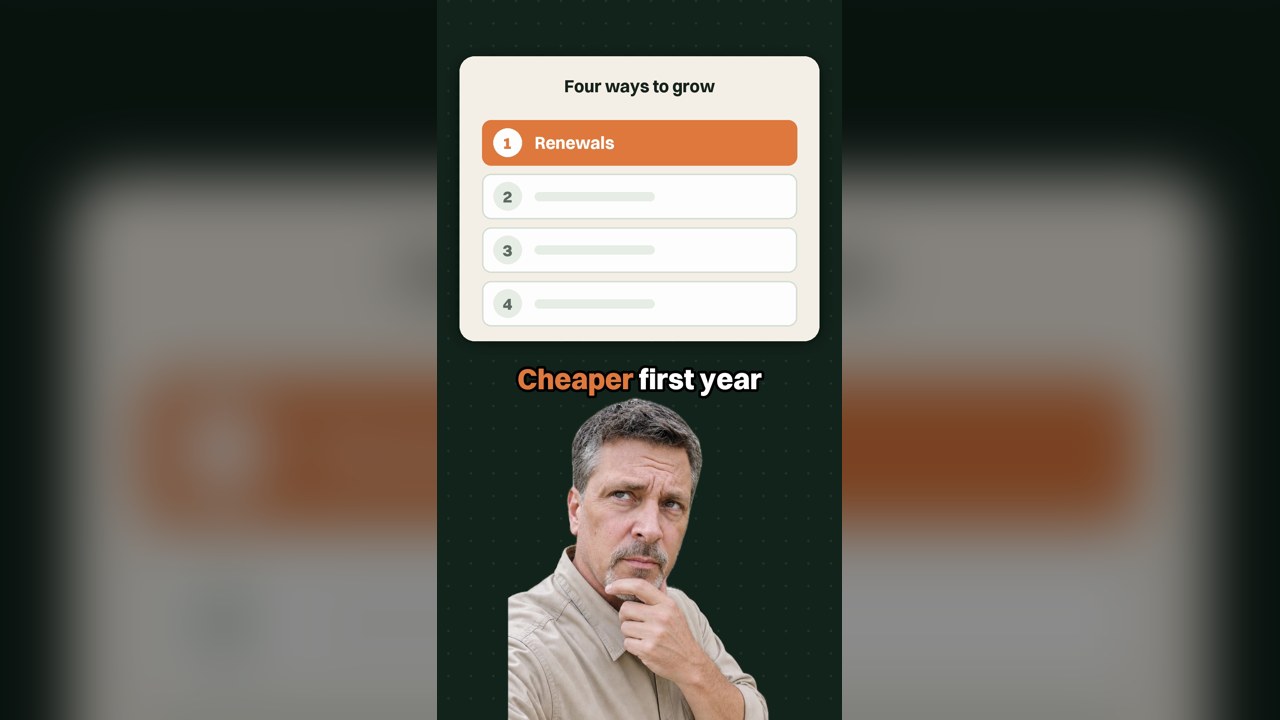
The best pest control marketing strategies start with your plan customers, then use Google and ads to fill the route. I'm Joshua Albanese of Spearleaf, and my short video on pest control marketing answers an owner with about 400 quarterly customers. This guide covers renewals, the quarterly visit, one-time jobs, pest seasons, Google, ads, and the rules for what your ads can say.
What are the best pest control marketing strategies?
The best ones keep plan customers renewing, turn visits and one-time jobs into new plans, then add Google and ads. Recurring revenue was 85.4% of residential pest control service revenue in 2025, per the National Pest Management Association. Start with the customers already on your route, then buy ads to fill the gaps.
The owner in my video says everything he reads about pest control marketing is ads. One reviewer of a marketing agency on Trustpilot wrote, "The only 'input' I got from my sales rep was 'spend more money'."
The goal is easy to say: word of mouth works, but we want more consistent lead flow. In my video, three of the four ways to get there start with customers you already have.
Why plan customers come first for a pest control company
Plan customers come first because they are revenue you already earn, on a route you already drive. In NPMA's summary of the 2025 industry survey, 36.8% of respondents said too few technicians held back growth. Protect the stops already on your route before you pay to add new ones.
The same survey counted 16,565 pest control firms in the US, and 81.4% ran one or two locations. Most firms are small, and every tech hour counts.
This order is a planning lens, and it breaks down. A new company with few plan customers has little to renew, so Google and ads come first there. Your seasons may also differ from the ones below, depending on where you work.
Four pest control marketing strategies, starting with customers you have
Renewals before a plan lapses
Call before a plan ends, not after it lapses. It costs office time, not ad money. Use the call to remind them who kept the bugs out all year.
The quarterly visit
Your tech is at each plan home four times a year. Have the tech ask for an honest review, and whether the neighbors have ants too.
One-time jobs into plans
The wasp nest or mouse call is a tryout for the plan. Offer the plan before the tech leaves, while the result is fresh.
The pest seasons
Call past customers before the autumn rodent push and before termite swarm season where you work. Slow months are when this outreach fits.
Renew pest control plans before they lapse
Make the renewal call before the plan ends, while the customer still remembers the last visit. The owner in my video loses a few customers every spring to a big franchise's door knockers offering a cheaper first year. Call first, and remind them who kept the bugs out all year.
I recommend pulling a list from your field service software each month of every plan ending in the next two months. Have the office call each one, and log the answer next to the account.
Customers who cancel are not gone for good. My team runs customer reactivation for businesses that want past customers back. Keep every call inside the TCPA rules further down this page.
Turn the quarterly service visit into reviews and neighbor referrals
Your tech is at each plan home four times a year, which gives four natural chances to ask for a review. Google's content policy bans offering anything for a review and bans asking only happy customers. Ask every customer, offer nothing, and never pressure anyone at the door.
The FTC's rule on consumer reviews also bans rewards tied to a positive or negative review. The free review link generator gives you a link to send after each visit.
Then ask about the neighbors. If a plan customer has ants, ask whether the neighbors do too, and whether they'd pass along your name. Keep any referral thank-you separate from reviews, so no reward is ever tied to one.
Turn one-time pest control jobs into recurring plans
- Treat every one-time call, such as a wasp nest or mice in the garage, as a tryout for the plan.
- Have the tech explain what they found and what a plan would cover at this home.
- Offer the plan before the tech leaves, with the first visit date written down.
- If you sell the plan at the home, give the cancellation notice the FTC's Cooling-Off Rule requires, covered below.
- If they say no, ask whether you can follow up, and note the answer in the account.
- Count each month how many one-time jobs became plans.
Plan your pest control marketing around the pest seasons
The owner in my video is busy in spring and summer, and then the phone sits quiet. Slow months are the time to call past customers, before the next pest arrives. Build a call list for each season you serve.
Mice are the clearest autumn example. UC IPM's pest note on house mice says they frequently enter homes in autumn when nighttime temperatures become colder. Call past rodent customers and plan members before that rodent push.
Do the same before termite swarm season where you work, using your own records of when swarm calls came in. A seasonal page on your website, such as a fall rodent page, gives those calls somewhere to land.
A seasonal call calendar for past pest control customers
- Pull last year's calls by month from your field service software, so you see your own busy and slow weeks.
- About six weeks before each slow stretch, list past one-time customers and lapsed plans for the pest that season brings.
- Before autumn, call past rodent customers and offer an inspection or a plan.
- Before your local termite swarm season, call past termite customers and nearby plan members.
- Call during allowed hours, and text only customers who agreed to texts, under the rules below.
- Count the visits and new plans each seasonal campaign produced.
Calling and texting pest control customers under the TCPA
The FCC's TCPA rules in 47 CFR 64.1200 set the federal floor for renewal and seasonal outreach. States can add stricter rules, so have your attorney review your scripts and consent forms.
-
Autodialed or prerecorded marketing calls and texts to a cell phone need prior express written consent.
-
That consent is a signed written agreement, and e-signatures count. It names your company and the number, and says signing isn't required to buy.
-
Sales calls are allowed only from 8 a.m. to 9 p.m., the customer's local time.
-
The Do Not Call Registry rule covers telephone solicitations, which the FCC defines to leave out customers you have an established business relationship with.
-
That relationship means a purchase in the last 18 months, or an inquiry in the last three. Their do-not-call request to you ends it.
-
The relationship does not replace written consent for autodialed or prerecorded marketing calls and texts.
-
Customers can revoke consent any reasonable way, such as texting stop, quit, end, revoke, opt out, cancel or unsubscribe. Honor it within ten business days.
-
Keep each do-not-call request on file for five years.
Pesticide safety claims to keep out of pest control advertising
Leave safety words out of your ads, website and trucks. EPA's labeling rule at 40 CFR 156.10 treats claims such as "safe," "harmless" or "nontoxic to humans and pets" as misbranding. That holds even with "when used as directed" added.
That federal rule is written for product labels, and state rules can carry the same words into pest control advertising. Texas bans them in 4 TAC 7.152, along with "environmentally friendly," "organic" and comparative safety claims.
Some marketing guides for pest control suggest "non-toxic" ad copy anyway. Texas also bans any claim you could not back up when you made it. Sell what you can show instead: the visit schedule, your license, what the plan covers, and your reviews.
State licensing rules for pest control ads
Licensing rules for pest control advertising are set state by state. Texas says no one may advertise structural pest control services without a structural pest control license. It also requires every ad to include the business name shown on the license.
Texas counts written, audio, audiovisual and digital communications as advertising. Check every place your name appears, from the website to the truck wrap.
Find your state's pesticide regulatory agency in the NPIC state directory, and ask what your ads must show. NPIC says one agency in each state works with the EPA to enforce pesticide rules.
Door-to-door pest control sales and the FTC Cooling-Off Rule
If your reps knock doors, or your techs sell plans at the customer's home, the FTC's Cooling-Off Rule can apply. These are its main terms, in plain words.
-
It covers sales of $25 or more made at the buyer's home, and $130 or more at places like fairs or a workplace.
-
The buyer can cancel until midnight of the third business day after the sale. Sundays and federal holidays don't count.
-
Give a receipt or contract with the cancellation statement, plus two copies of a Notice of Cancellation form.
-
Tell the buyer about the right to cancel out loud, at the time they sign.
-
The contract cannot waive that right, and you cannot misrepresent it.
-
If the buyer cancels, refund every payment within 10 business days.
-
A visit the customer asked for, to fix a problem, can fall outside the rule. A plan sold during that visit does not.
-
The rule leaves state laws and local ordinances on door-to-door sales in force. Ask your city or township clerk whether reps need a solicitor permit.
Trucks, door hangers, mail and social posts for pest control advertising
Your trucks and uniforms are ads that drive your route every day. In Texas, they also need the business name from your license. Keep the wrap to your name, phone number and services, with no safety words.
Aim door hangers and postcards at the streets around homes you already treat. Social posts in neighborhood groups can show real work, such as a sealed entry point, without any safety claims.
Lead sites such as Angi and Thumbtack sell leads too. Judge them, like every source, by how many become plans.
Your Google Business Profile and reviews can bring pest control calls
For homeowners who don't know you yet, your Google listing and reviews can bring map calls over months. Google's Business Profile performance report counts taps on your call button, so you can watch that number month by month. My team handles Google Business Profile optimization when you want help.
For the steps, read how to get more calls from your Google Business Profile. Steady reviews from quarterly visits feed this listing too, under the same review rules above.
Local Services Ads and search ads to fill your pest control route
The owner in my video asked whether he should skip ads. My answer was no: plan base and seasons first, then ads to fill your route.
Google's screening page lists pest control for Local Services Ads, with background, insurance and state license checks for some advertisers. These ads charge per valid lead, such as a call or message. Google's transition page moves select pest control advertisers into Google Ads from August 2026.
Search ads charge per click, so check local prices in Google's Keyword Planner first. One reviewer of a marketing agency on Trustpilot described "ALOT of clicks and no calls," so track calls and plans. My team runs Google Ads management alongside organic work.
ChatGPT answers and your pest control reviews
ChatGPT also answers questions like who to call for pests, and its picks change often. In my August 2026 study of 12 local services, 48.2% of businesses ChatGPT showed appeared again 4 to 9 days later. Pest control was not one of the 12, so treat this as a direction.
Review depth tracked with staying in the answer. Businesses that stayed had a median of 226 reviews, against 164 for those that dropped, at the same 4.9 median rating. That is descriptive, not causal, and it is one more reason to ask at every quarterly visit.
An address in the city asked about also stood out, with a descriptive odds ratio of 14.4. Keep your address and service area accurate everywhere, and see AI search optimization for the rest.
Track which pest control marketing turns into plan customers
- Ask every caller how they found you. One commenter on r/smallbusiness put it plainly: "You'd need to ask every customer how they found you".
- Tag each lead by source: renewal call, tech referral, one-time job, seasonal call, Google listing, ads, door-to-door or mail.
- Mark which leads became plans in your field service software, and which plans renewed a year later.
- Pull your Google numbers: calls from the Business Profile performance report, and leads and spend from Google Ads.
- Divide each source's cost by the plans it produced to get cost per plan. For renewals, the cost is office time.
- Review it monthly and move time and money toward what makes plans. See the local SEO metrics that matter.
The order to run your pest control marketing in
This is the order I recommend, matched to the calendar.
-
This month: renewal calls for every plan ending soon.
-
Every quarterly visit: an honest review request with nothing offered, and a question about the neighbors.
-
Every one-time job: the plan offer before the tech leaves, with the cancellation notice if it's sold at the home.
-
Before each slow season: calls to past customers about the pest that's coming.
-
Over months: your Google Business Profile, reviews and website.
-
To fill the route: Local Services Ads or search ads, judged by plans sold.
-
On every ad: your licensed business name, and no safety words.
Fill your pest control route with local SEO
My team at Spearleaf runs local SEO for service businesses: the Google Business Profile, reviews, service pages and the AI answers that read them. It's the work behind the map calls in this guide.
Talk to Spearleaf about local SEO
- Start here: where to find your Google review link.
- Weigh them: local SEO vs Google Ads.
- Then track it: local SEO metrics that matter.