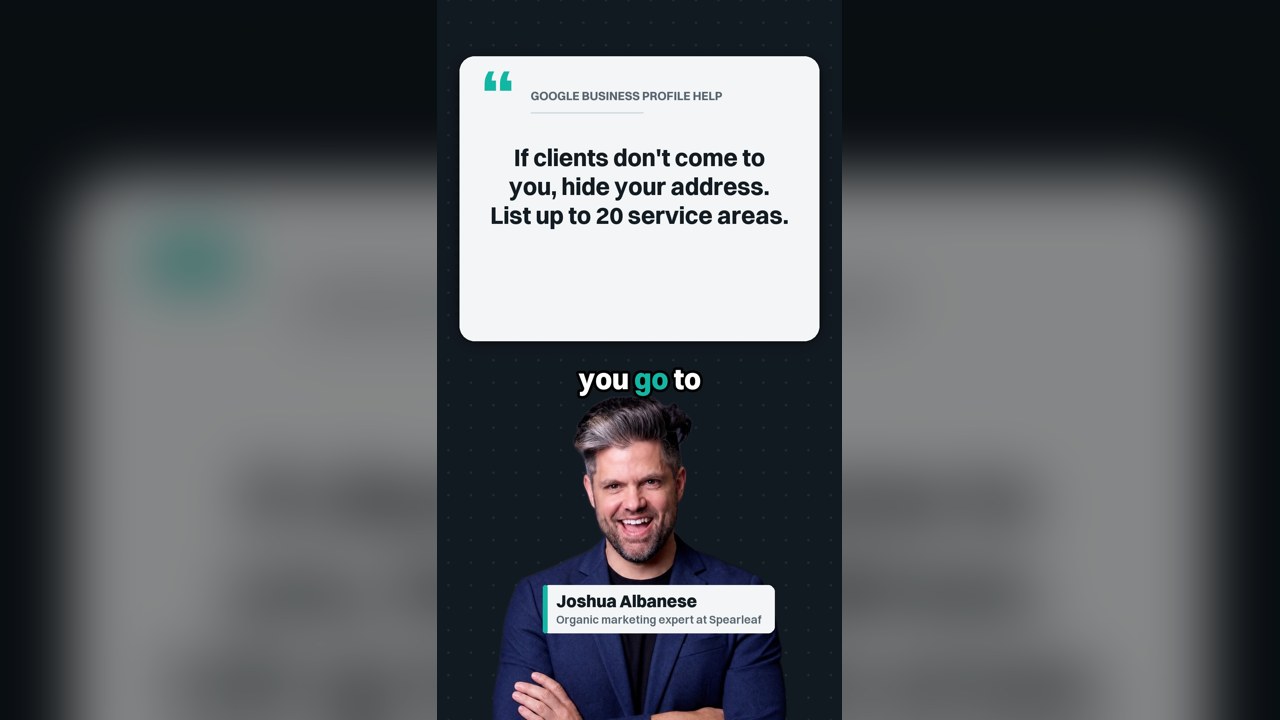
Marketing a home care agency that is non-medical and private pay means reaching the family who pays, usually an adult child. I'm Joshua Albanese, founder of Spearleaf, and my short video on marketing for home care covers four ways those families find you. If word of mouth works but you want more consistent lead flow, here is each way, sorted by speed.
How do you market a home care agency that is mostly private pay?
Market it to the family who pays, through four ways: their search, placement services, referral sources and reviews. Medicare.gov says Medicare doesn't cover personal care like bathing and dressing when that is the only care needed. Skip the Medicare referral pitch, which fits skilled home health, not meals and rides.
This guide sorts the options by how fast each one sends families. One small business owner on r/smallbusiness summed up long tactic lists: "Sorry, just feeling quite overwhelmed by all this info!"
Referral sources and placement services can send families within weeks. Your Google listing, your service pages and your reviews build over months. If you're good at what you do but need help getting found online, run both kinds at once.
Who pays for non-medical home care, and what it changes in your marketing
Private pay
The family pays from savings or income, so an adult son or daughter is usually the buyer. Show them your services, your towns, your start dates and how billing works.
Long-term care insurance
ACL says most policies pay once someone needs help with two or more of six daily activities, after a waiting period. Explain how you bill these policies.
Medicaid
Medicare.gov's long-term care page says Medicaid may pay if someone meets their state's rules. Programs vary by state, and Medicaid clients bring federal anti-kickback rules into play.
Veterans
The VA says its homemaker and home health aides work for organizations with a VA contract. To serve VA-paid clients, get that contract first.
Four ways of marketing a home care agency, sorted by speed
The family search
Builds over months. An adult child searches Google or asks ChatGPT for care that can start this week. Your Business Profile, service pages and reviews decide whether you show up.
Senior placement services
Can send families within weeks. Many charge the agency a fee. Check fit, fee terms and your state's rules before you sign.
Professional referral sources
Can send families within weeks. Discharge planners, case managers and geriatric care managers refer agencies that answer fast and start on time. Earn them with service, never gifts.
Reviews from families
Build over months. Adult children often read reviews before they call. Ask every family the same way, a few weeks into care, and offer nothing in return.
The family search and your home care Google Business Profile
The family search usually starts on a phone, with a son or daughter who needs care to start soon. AARP's 2025 caregiving report counts 63 million family caregivers, and six in 10 also hold a job. Make it easy to reach you after work hours.
Your Google Business Profile is often the first thing that family sees. Google's local ranking page names relevance, distance and prominence, and says more reviews and positive ratings can help. It also says there is no way to pay for a better local ranking.
Write what you do in plain words: personal care, companion care, overnight care, rides to appointments. My team handles Google Business Profile optimization when you want help setting it up.
Service areas on a home care agency's Google Business Profile
Families rarely visit a home care office, and Google's service area rules are written for businesses like yours. A reviewer of one marketing agency put the cost plainly. "Once we started getting calls it was for things that we did not service, or was not anywhere near our location."
-
If families never come to your office, remove your address from the profile. Google asks for this.
-
Hiding it isn't shady. It tells Google you go to the client, which is how home care works.
-
List up to 20 service areas, by city or ZIP code.
-
Keep the whole area within about two hours of driving time from your office.
-
Match the towns on your profile to the towns on your website and your intake script.
Service pages for each home care service and the towns you cover
Give your website a page for each service families search for, such as overnight care, rides, respite care or dementia care. Name the towns you serve on each page, and say what the first week looks like.
Write for the adult child. Say the minimum hours per visit, how fast care can start, and who to call at night. Put your phone number at the top of every page.
The Bureau of Labor Statistics describes personal care aides' nonmedical work as companionship, cleaning, cooking and driving. Use those plain words, and leave out medical tasks your license does not cover. If the site needs rebuilding, my team does web design for service businesses.
Long-term care insurance on your home care website
If you work with long-term care insurance, say so on your service pages and explain how billing works. ACL explains that benefits start after a benefit trigger and an elimination period. Most policies use help with two or more of six daily activities, or a cognitive impairment, as the trigger.
The elimination period is usually 30, 60 or 90 days, chosen when the policy was bought. Some policies count only days of paid care toward it. That means the family may pay privately first, so say how that works.
Spell out who files the claim, what paperwork the insurer's care manager needs, and how you bill once the policy pays. A family comparing agencies remembers the one that made this simple.
What ChatGPT and Google's AI show when a family asks for home care
ChatGPT usually shows a short list of agencies, and the list can change between asks. In my August 2026 study, 48.2% of businesses ChatGPT showed were shown again 4 to 9 days later (469/974). Check yours: type "home care for my mom in" your town into ChatGPT and Google.
Home care was not one of the 12 services I tested, so treat this as a pattern. Businesses with an address in the asked city had about 14 times the odds of being shown. That compares similar businesses in one search and is not proof of cause.
Google's service area rules still come first, so name your towns clearly on your website and listings. The rest is AI search optimization.
Senior placement services and what to check before you pay a fee
Placement services send families to home care agencies, and many charge the agency a fee. Some states regulate them, and Washington's RCW 18.330 covers referral agencies that in-home care providers pay, and requires a written disclosure. Check these before you agree:
-
Weigh the fee against what a client brings in over the months they stay.
-
Check whether those families fit your towns and your minimum hours.
-
Ask how the service picks which agencies a family hears about, and whether families are told you paid.
-
For Medicaid or other federal program clients, read the federal safe harbor for referral services. It covers fees only when they are equal for every agency and based on operating cost, not referral volume or value.
-
Get a lawyer's eyes on the fee terms first.
Discharge planners, case managers and other home care referral sources
Hospital discharge planners, rehab social workers and case managers talk to families the week someone comes home. Medicare's rules for hospitals require planners to assess the need for "non-health care services and community based care providers". The same rule centers the patient's own goals and preferences.
They want an agency that answers the phone, can start fast and covers the right towns. Earn them with fast answers and start dates you keep.
Look beyond the hospital, too. Aging Life Care Professionals, also called geriatric care managers, guide families through in-home care decisions. Elder law attorneys help families plan for long-term care, and your Area Agency on Aging connects older adults with services at home.
Anti-kickback and patient brokering rules for home care referral sources
Some marketing guides suggest gift cards or free hours for referrals. Read the rules first, because they reach further than most owners expect.
-
The HHS Office of Inspector General says paying for referrals of federal health care program business is a crime. Medicaid counts.
-
Remuneration "includes anything of value," and the law covers the person who pays and the person who accepts.
-
A separate federal law sets civil penalties for offering Medicare or Medicaid clients anything of value to influence which provider they choose.
-
State laws can reach private pay. Florida's patient brokering law applies to "any person". Its definition of a provider includes those registered with the state's health care agency.
-
Ask your lawyer before you give a referral source anything of value, even a holiday gift card.
How to answer home care inquiries so families and referrers call back
- Answer nights and weekends, too. A family calling after a hospital discharge may need someone by morning.
- Ask every caller the same intake questions: the town, the hours needed, the start date and who pays.
- Say yes only to shifts you can staff, including overnights and weekends.
- Give a real start date, then keep it.
- With the family's permission, call the referring planner back the same day to confirm care has started.
- Ask every new family how they found you, and write the answer down.
Reviews from home care families, asked the same way every time
Adult children often read reviews before they call, so ask every family the same way, a few weeks into care. Thank them, and offer nothing for the review.
Google's content policy bans incentives such as discounts or free services, and bans asking only happy customers. It also removes reviews written with a conflict of interest, such as by employees or family. Don't ask your caregivers to review the agency.
The FTC's 2024 rule bans fake reviews and rewards that depend on a review being positive or negative. For a steady system, see how to improve your Google rating without gaming it, or let my team run reputation management.
HIPAA and client privacy in home care marketing
HIPAA does not cover every home care agency, so start with the test, then follow the privacy habits either way.
-
HIPAA covers a health care provider that transmits health information electronically in a covered transaction, such as an electronic claim. Confirm your status with a lawyer.
-
A covered agency needs a client's written authorization to use their health information in marketing.
-
Either way, get written permission before you use a client's name, photo, story or review.
-
Reply to reviews without confirming the reviewer is a client or mentioning any care details.
-
Keep photos taken inside a client's home off social media unless the family agrees in writing.
-
Check your state's privacy rules too, since some go further.
State licensing and registration rules in home care ads
Some states license or register non-medical home care, and some put rules on your ads. In Florida, section 400.509 requires companion and homemaker providers to register with the state. Any ad for those services must include the registration number.
The same Florida section exempts these providers from home health licensure only while they provide no home health service. Advertise only the services your license or registration covers.
Check your state's licensing agency for its advertising rules. Use your exact licensed or registered name on your website, your listing and your printed materials.
Market only the home care shifts you can staff
One honest check before you spend on any of this. If you're losing caregivers and still saying yes to every new family, hiring may be your real limit.
The Bureau of Labor Statistics projects about 760,500 openings a year for home health and personal care aides. Many of those openings are expected to come from replacing workers who move to other jobs or leave the workforce.
So market only the shifts you can actually staff, overnights and weekends included, and keep hiring every week. Start dates you keep are also what keep referrers sending families.
Community events, social media and paid search for a home care agency
Most home care marketing guides list community events and social media, and both help in a supporting role. AARP's 2024 survey found 75% of adults 50 and older want to stay in their current homes as they age. Bring that conversation to senior centers, faith groups and health fairs.
Use social media to show your caregivers and your community work, with permission for every photo. It also helps with hiring.
Paid search can bring calls sooner, but Google charges per click at a price its auction sets. Run ads once you can count which clicks became clients. My team runs Google Ads management as a complement to organic work.
Track new home care clients by source, counted when care starts
- One owner on r/smallbusiness put it plainly: "You'd need to ask every customer how they found you". Ask on every intake call and form.
- Log each inquiry in one spreadsheet: date, source, town, hours needed and who pays.
- Count a new client only on the date care actually starts, not when the call comes in.
- Each month, download your Business Profile performance report: calls, website clicks and search terms.
- Compare starts by source with what each source cost: fees, ad spend and staff time.
- Note how many months each client stays, so you can weigh placement fees fairly.
Get help with local SEO for your home care agency
My team at Spearleaf runs local SEO: your Business Profile, reviews, service pages and the AI answers that read them. Once intake and referral sources are running, it is the next lever for steady private-pay families.
Talk to Spearleaf about local SEO
- Start here: how to get more calls from your Google Business Profile.
- Then this: how to improve your Google rating without gaming it.
- Then track it: local SEO metrics that matter.