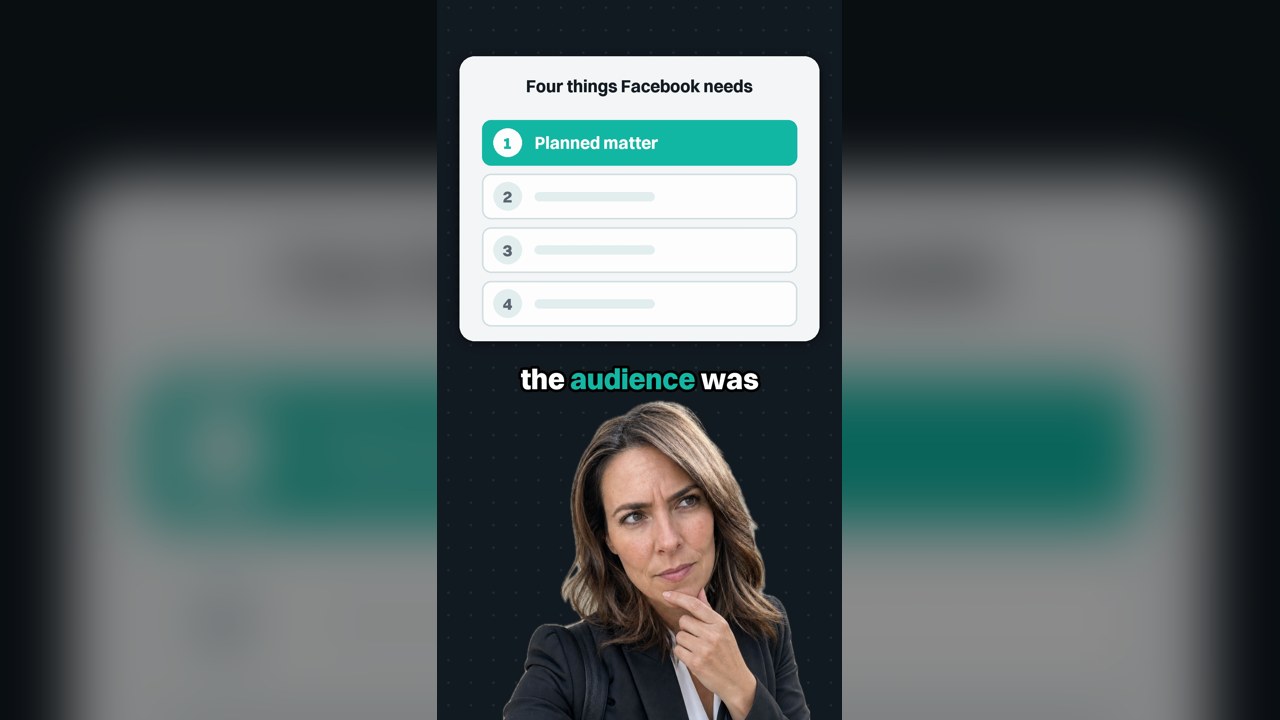
Facebook ads for lawyers can sign cases when the ad fits a planned matter and every form gets a same-day call. They also need comment control and ads inside bar and Meta rules. Watch Joshua Albanese explain what lawyer Facebook ads need before they sign anyone in a short video.
Do Facebook ads for lawyers sign real cases?
Facebook ads for lawyers can sign real cases, but a form fill is only a request for a call. Pew Research Center's 2025 survey found that 71% of US adults use Facebook. Measure the ads by signed cases, because reach is rarely what is missing.
Most owners first ask whether a budget would be enough to generate leads. The better question is whether the leads fit your practice. One business owner, reviewing an agency's ad work on Trustpilot, said the calls were "for things that we did not service."
When forms pile up and few sign, the ad often reached the wrong kind of matter, or nobody called back fast. My guide to law firm marketing sorts every channel by whether clients hire in a crisis or after planning.
Planned matters vs urgent matters on Facebook
Planned matters fit best
Estate plans, immigration petitions and some business work can wait. A person weighing one for months may stop on a calm, clear Facebook ad and fill in a form.
Urgent matters are a harder fit
Someone in a holding cell isn't scrolling Instagram. Someone hurt this week often searches Google or calls a lawyer a friend names, so urgent ads compete with search.
Where this lens breaks
Real practices mix both. An injury video can stay in memory until an accident happens, and a planned client may still search. Let your own signed cases decide.
Facebook ads and Google Ads do different jobs for a law firm
Google Ads show a firm to people who type a legal question into Google. Facebook ads reach people who fit an audience you choose while they scroll Facebook and Instagram.
That makes Google the natural home for urgent matters and Facebook a better test for planned ones. You can run both, with a separate budget and separate numbers for each.
If you are weighing paid search against organic work, my comparison of local SEO vs Google Ads walks through the trade-offs.
Can lawyers advertise on Facebook?
Yes, lawyers can advertise on Facebook. ABA Model Rule 7.2 says a lawyer "may communicate information regarding the lawyer's services through any media," and Facebook is one. Check your state bar's version, because each state adopts its own rules and many add to them.
Meta's rules sit on top of the bar's. The same ad account runs ads on Facebook and Instagram, so every ad has to pass both rulebooks on both apps.
Build a Facebook lead form that screens before you call
- Ask when it happened. A crash from years back can be stale or past your state's filing deadline.
- Keep medical questions off the form. Meta requires its prior written permission before a lead form asks about health or medical treatment, so ask on the callback.
- Ask which state or county the person is in, so you only call people your lawyers can help.
- Add your firm's privacy policy link and any disclosures your state requires on the form.
- Add a consent checkbox if you plan to text leads. The texting section below covers what it needs to say.
- Name the responsible lawyer or firm, with contact information, on the ad or the form.
Questions Meta lead forms cannot ask without permission
Meta's Advertising Standards list questions a lead form must not ask without Meta's prior written permission. The list includes health and medical treatment, criminal or arrest history, insurance information, and how much debt someone has.
Those are the core facts of injury, criminal defense and bankruptcy matters. Ask them on the callback or on your own website intake form instead.
Meta's Lead Ad Terms also bar targeting lead forms to minors and make the firm responsible for every disclosure the law requires. Collect only what you need to check conflicts and call back.
Facebook ad copy that passes Meta and the bar
Meta's personal attributes policy says ads "must not contain content that asserts or implies personal attributes" of the viewer. Its list includes health, vulnerable financial status and criminal record, and "Are you a convicted felon?" is one of Meta's examples. Write about the situation, like steps after an arrest.
The bar adds its own limits. ABA Model Rule 7.1 bars false or misleading statements, and its comment on past results warns they can create "an unjustified expectation."
Under the comment to Rule 7.2, saying you specialize is generally allowed if it is true, though some states restrict the word. Claiming certification as a specialist needs a state-approved or ABA-accredited certifier named in the ad. Rule 7.2(d) requires a responsible lawyer or firm's name and contact information.
Call every Facebook lead the same day and log who signed
A pile of forms nobody calls is just a list. Calling someone who filled in your form answers their request, and the ABA's comment to Rule 7.3 says that is not solicitation. Call the same day, and log the ad, the form and whether the matter signed.
Measure speed with tools you already have. Meta's lead data records when each form came in and which ad and form it came from. Your phone log shows when someone called back.
Ask each new client how they heard about you as well. That keeps referrals and past clients from being credited to the ad.
Texting Facebook leads needs written consent
If your firm texts leads through software that sends automatically, federal consent rules can apply. The FCC says its rules ban autodialed texts to mobile phones without prior consent, and that "commercial texts require written consent."
Under 47 CFR 64.1200, written consent is a signed agreement that names the phone number. It must clearly disclose that signing isn't required to hire you, and an electronic signature can count.
Add that consent as a custom disclaimer checkbox on the lead form, and keep the response with the lead record. Ask your own counsel about state texting laws, which can add more.
Hide or delete comments on sensitive law firm ads
On ads about immigration, divorce or criminal charges, people may post their own story in the comments. Hide or delete those comments, and invite the person to call or send a private message.
Keep the details off the public thread. Under ABA Model Rule 1.18, someone who consults a lawyer about hiring them is a prospective client. The lawyer can't use or reveal what they learned.
The Florida Bar's networking guidelines also say a lawyer must remove third-party posts on the lawyer's page that break the advertising rules. Check whether your state takes a similar view.
Skip retargeting divorce page visitors on Facebook
Someone researching a divorce quietly may share a laptop with their spouse, and retargeted ads follow them. Google's policy on relationship hardships already bars divorce ads from using advertiser-built audiences, such as your own site visitors.
Meta's Business Tools Terms bar sending health, financial or other sensitive information. Custom audience criteria must not be based on it either. A divorce-page audience is at least a gray area under that wording.
I'd skip it on Facebook too, and apply the same caution to immigration, bankruptcy and criminal defense pages.
Targeted Facebook ads and state solicitation rules
A Facebook ad shown to the general public is not solicitation under the ABA's comment to Rule 7.3. Rule 7.3 calls it solicitation when contact targets a specific person the lawyer knows, or should know, needs help with a matter.
States can draw that line closer. The Florida Bar treats a post shown only to people who self-identified with a specific legal need as targeted solicitation. Such posts must follow its targeted electronic rules and be filed for review.
The ABA's current Rule 7.3 has no labeling requirement, but states can add one. Florida's checklist requires "Advertisement" as the first word of a targeted social post or text. Rule 7.3(c) also bars soliciting anyone who has said no, or using coercion, duress or harassment.
Special ad categories and social issue rules for law firm ads
Meta's special ad categories cover housing, employment, financial products and services, and social issues, elections or politics. Meta's documentation says ads outside those categories declare none.
If an ad offers housing, a job or a financial product, such as an opening at your firm, targeting narrows. Age is fixed at 18 to 65+, gender can't be chosen, and US radius targeting starts at 15 miles.
An ad that argues one side of a public issue can fall under Meta's social issue rules. Those rules require authorization and a "Paid for by" disclaimer. Check before running debt, housing or immigration policy campaigns.
Bar rules and Meta rules checklist for Facebook ads for lawyers
Run every ad through this list, then check your state bar's version of each rule.
-
Name at least one responsible lawyer or firm, with contact information (ABA Rule 7.2(d)).
-
Promise no outcomes, and avoid past results that suggest others will get the same result (Rule 7.1 and its comment).
-
Say you specialize only when it is true and not misleading (Rule 7.2 comment). Claim "certified" only if an approved body certified you, and name it.
-
Keep copy from implying you know the viewer's health, finances or criminal record (Meta).
-
Leave health, arrest, insurance and debt questions off lead forms unless Meta gives written permission.
-
Add any label your state requires, such as Florida's "Advertisement" on targeted posts.
-
File paid posts for review where your state requires it. Florida requires it for paid posts to people you have no prior relationship with, unless they are tombstone ads.
-
Pay for the ads, never for a recommendation. Rule 7.2(b) bars paying anyone to recommend you, with narrow exceptions such as nominal thank-you gifts.
Measure Facebook ads by cost per signed case
- Add a field to your intake log for the source, the ad and the form of every Meta lead.
- Download your leads from Meta each week. Each lead carries the time it arrived, the ad and the form.
- Pull the month's amount spent for each campaign from Meta Ads Manager.
- Divide that spend by the signed cases from the same campaign. That is your cost per signed case: dollars in, dollars out.
- Compare it with what a signed case in that practice area is worth under your fee structure.
- Move budget toward the ads that sign, and pause the ones that only produce forms.
See what other law firms run in the Meta Ad Library
Try this tonight: search local firms in the Meta Ad Library. Meta's transparency page says anyone can search "all active ads running across products from Meta."
Note which practice areas they advertise and which ads stay up for months. A firm that keeps paying for an ad has a reason, though you can't see its signed cases.
Search your own firm too. One owner on Trustpilot paid an agency for months and was "unable to see any of the ads" they paid for. The Ad Library settles that question.
Google Ads for the urgent side of your law firm
If urgent matters drive your caseload, I think search ads fit them better than Facebook. At Spearleaf I run Google Ads management as a paid complement to organic work, with Meta ads as an optional add-on.
Talk to Spearleaf about Google Ads management
- Plan every channel around crisis and planned clients: law firm marketing.
- Set up paid search the right way: Google Ads for small business.
- Count what pays, not what looks busy: local SEO metrics that matter.